What would you say if someone told you they generated 250,000 opt-ins in four weeks without spending a single dollar on advertising? You’d probably ask what they were selling, or whether the number was real, or — more likely — you’d just scroll past because it sounds like the kind of claim that evaporates the moment you look at it closely. But here’s what makes this particular case interesting: the entire operation was orchestrated by an AI agent, and the workflow behind it is something you can actually replicate.
What Stack Powers a 250K-Lead AI Agent?
The AI agent market is growing at a pace that makes most tech trends look sluggish — from $7.63 billion in 2025 to a projected $182.97 billion by 2033, according to Grand View Research. That growth reflects something practical: businesses are discovering that AI agents connected to the right tools can handle complex multi-step workflows that used to require entire teams. But what does a system like this actually look like under the hood?
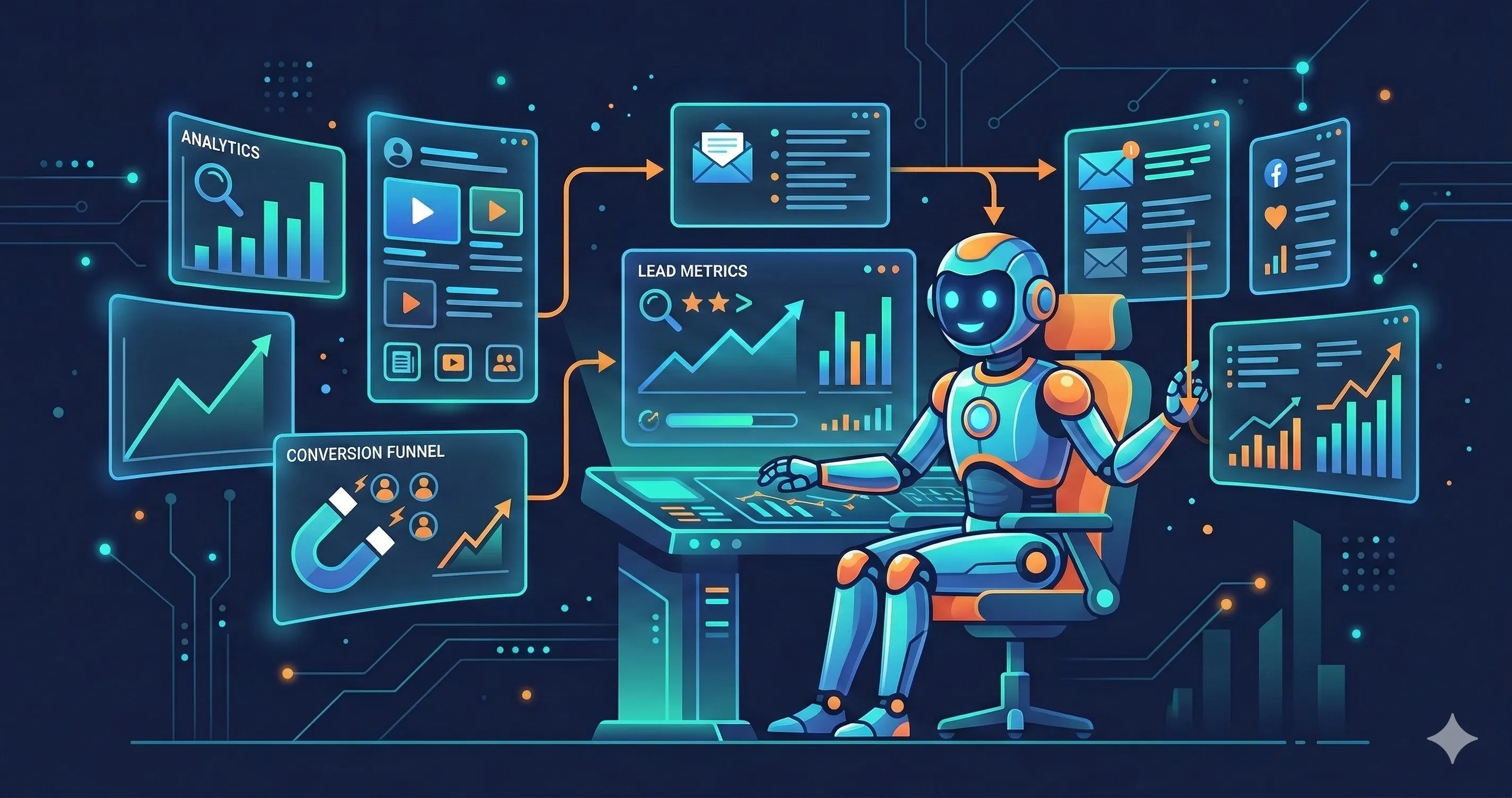
Matthew Ganzak, a marketer who’s been publicly documenting his AI agent workflows on social media, recently broke down the exact system his OpenClaw agent runs. The stack isn’t exotic — it’s a combination of accessible tools arranged to let the automation handle the heavy lifting end to end:
- Research & ideation: OpenClaw orchestrates the workflow; Claude handles deep analysis
- Content creation: Claude drafts copy aligned with demand signals from the research stage
- Sales funnel & nurturing: GoHighLevel manages AI-powered chat bots that qualify and nurture incoming prospects
- Cold outreach: GoHighLevel automation plus Hunter.io for email verification and enrichment
- Reporting & intelligence: OpenClaw acts as the central orchestrator, feeding performance data back into every stage
None of these tools are particularly new or surprising on their own. What’s notable is how they work as an interconnected system where the AI sits at the center, making decisions about what to research, what content to create, who to reach out to, and how to adjust based on what’s actually working. That orchestration layer is where the real value lives, and it’s the piece most people miss when they try to build their own automated lead generation pipeline.
An AI lead generation stack that combines orchestration, content creation, cold outreach, and funnel nurturing into a single agent-managed workflow can dramatically outperform siloed tools. Gartner predicts that 40% of enterprise applications will feature task-specific AI agents by the end of 2026, up from less than 5% in 2025 — a trajectory driven largely by this kind of integrated, autonomous capability.
Why Do Proactive AI Agents Outperform Reactive Ones?
A Google Cloud survey of 2,500+ executives found that 52% of organizations are actively deploying AI agents, with 74% achieving ROI within the first year. The key differentiator between those who see returns and those who don’t often comes down to a single architectural decision: whether their agents operate proactively or reactively.
There’s a distinction that comes up a lot in AI circles right now, and it’s worth understanding because it fundamentally changes how much value you get out of an AI assistant. Most people use their agents reactively — you sit down, type a prompt, get a response, type another prompt, and so on. You’re the bottleneck. Every task waits for you to initiate it, every decision passes through your brain, and the automation only works when you’re actively paying attention to it.
A proactive AI agent flips that relationship entirely. Instead of waiting for instructions, it monitors signals, identifies opportunities, and takes action according to workflows you’ve defined. According to research from Slack and Dataiku, proactive systems use historical data and predictive modeling to anticipate what needs to happen next. They don’t simply respond to what’s already happened. In a lead generation context, that means your automation is continuously scanning for new prospects, analyzing which messages perform well, adjusting its approach based on conversion data, and flagging opportunities that need your personal attention.
| Reactive AI | Proactive AI | |
|---|---|---|
| Trigger | Waits for human prompt | Monitors signals autonomously |
| Bottleneck | Human availability | Workflow definition |
| Lead generation | Manual prospect search | Continuous signal mining |
| Content strategy | Executes what you ask | Recommends what to create |
| Optimization | Requires manual analysis | Self-adjusts via feedback loops |
| ROI timeline | Depends on operator effort | 74% achieve ROI within first year (Google Cloud) |
This is the model Ganzak describes running. His OpenClaw doesn’t wait around for him to say “go find me leads.” It’s already doing signal mining, already clustering keywords, already validating offers against real demand data — and it uses that research to inform everything downstream. If you’ve already set up cron jobs and heartbeats for your agent, you’re halfway there. The difference is pointing that proactive capacity at a revenue-generating workflow instead of just monitoring dashboards.
How the AI Lead Generation Workflow Actually Runs
Companies leveraging AI for sales see a nearly 50% increase in appointments and leads, while reducing call time by 60–70% and slashing costs by 40–60%, according to McKinsey’s State of AI research. Those gains don’t come from any single tool — they come from connecting research, content, prospecting, and nurturing into one continuous pipeline. How do you go from a collection of disconnected tools to a system that generates qualified contacts while you sleep?
The workflow breaks down into four interconnected stages, and the beauty of it is that the system manages all four simultaneously rather than treating them as separate projects:
- Research & demand validation — signal mining, keyword clustering, and offer validation before anything gets created
- Content that attracts — demand-driven content strategy aligned with what prospects are already searching for
- Cold outreach at scale — verified, personalized email campaigns running in parallel with content
- Funnel nurturing & conversion — AI-powered chat, lead scoring, and automated appointment booking
Stage One: AI-Driven Research and Demand Validation
Before any content gets created or any email gets sent, the system does genuine market research. It starts with signal mining — scanning the web, social platforms, and industry publications for trends, conversations, and pain points that indicate real demand. Claude Sonnet handles the deeper analysis, synthesizing findings into actionable intelligence. From there, the automation clusters keywords to understand how people are actually searching for solutions, then validates the offer against that demand data. The key insight: the system understands what people want before it starts creating anything. That means the content it produces and the messages it sends are already aligned with genuine market interest.
This matters more than most people realize. According to research from Improvado and MindStudio, the biggest gains in AI-powered prospect acquisition come not from increasing volume but from deciding who to contact, when, and with what message. The research stage is what makes that precision possible. It’s the step most DIY automation setups skip entirely.
Stage Two: AI Content That Attracts Prospects
With the research done, the system moves into content creation. And this is where it gets interesting — the automation doesn’t just write blog posts or social media captions in isolation. It orchestrates all the content based on the demand signals it identified in stage one, which means every piece of content is designed to attract people who are already searching for solutions. The agent coordinates the overall content strategy, Claude handles the actual writing, and the output feeds directly into the awareness layer of the funnel.
Ganzak mentioned something that stuck with me: his OpenClaw told him to make the Instagram reel that documented this very workflow. The agent identified that content showing real AI automation results was performing well in his niche, so it recommended he create a behind-the-scenes breakdown. That’s proactive content strategy in action — the agent isn’t just executing your content calendar, it’s helping decide what should be on that calendar in the first place. If you’re already using your agent for automated social media posting, adding this research-driven content planning layer is the natural next step.
Stage Three: AI-Powered Cold Outreach at Scale
Parallel to the content engine, the system runs a cold outreach pipeline that works like this: it identifies and builds prospect lists based on the ideal customer profile defined during research. It then verifies and enriches those contacts through Hunter.io, which finds professional email addresses and confirms they’re active. From there, the agent personalizes each outreach message — not with generic “Hi {first_name}” tokens, but with context drawn from the prospect’s role, company, and recent activity. The emails go out, the agent handles follow-up sequences automatically, and qualified responses get routed toward booking calls.
The scale here is what matters. A human doing this manually might send 50 personalized cold emails a day if they’re disciplined. An AI-powered pipeline running the same workflow can handle hundreds or thousands, and because it’s working from verified contact data and personalized messaging, the response rates tend to be significantly higher than spray-and-pray approaches. AI-powered outreach platforms achieve a 25% response rate compared to just 10% for traditional methods, according to SuperAGI’s analysis. And organizations implementing AI-driven email campaigns have reported up to 167% increases in qualified lead generation, according to DesignRush’s analysis of lead generation strategies.
Stage Four: AI Lead Nurturing and Conversion
This is where GoHighLevel comes into the picture in a serious way. Once prospects enter the funnel — whether from content, cold outreach, or both — GoHighLevel’s AI takes over the nurturing process. These aren’t basic drip email sequences. The platform analyzes behavior patterns, engagement history, and timing cues to determine when and how to follow up with each contact. It qualifies prospects through conversational AI chat, books appointments automatically, and routes high-intent buyers to the sales team while continuing to nurture everyone else. Speed matters here: a Harvard Business Review study found that firms contacting prospects within one hour are nearly 7x more likely to qualify them than those waiting even one additional hour — and AI responds in seconds.
Meanwhile, the system and Claude handle the conversion copy — writing the landing pages, the VSLs (video sales letters), and the email sequences that move people from interested to committed. The AI lead scoring layer then determines which leads are most likely to convert and prioritizes them accordingly. Companies using AI-powered lead scoring see revenue increases of up to 35% compared to manual methods, according to research from Pecan AI, largely because reps stop wasting time on leads that were never going to close and focus their energy where it actually matters.
AI-orchestrated lead generation workflows that combine research, content, outreach, and nurturing into a single system consistently outperform siloed approaches. According to Gartner research cited by Improvado, AI-powered lead scoring alone reduces qualification time by up to 30% and increases sales productivity by 30% — and that’s before factoring in the compounding benefits of automated content creation and outreach.
How Does the Feedback Loop Make the System Smarter?
Sales teams spend an average of 18.5 hours per week on manual prospect acquisition tasks — roughly $13,000 per year in labor costs at $50 per hour, according to SuperAGI’s analysis. AI-assisted workflows don’t just reclaim those hours. They use the data generated by each interaction to get progressively better at every stage. What would it mean for your business if your demand generation system improved itself every single week?
Here’s the part of this pipeline that separates it from a one-time automation you set and forget. The entire system feeds performance data back into the AI, which uses that data to refine its approach on a weekly cycle. OpenClaw collects the metrics — which content pieces drove the most traffic, which outreach messages got the best response rates, which funnel stages have the highest drop-off — and passes them to Claude for analysis. Claude generates hypotheses about what to change, the system implements those changes, and the cycle repeats. The same scheduling infrastructure that powers your agent’s daily tasks drives this weekly optimization cycle.
This continuous feedback loop is what researchers in the AI space describe as the evolution from predictive analytics to agentic intelligence. The system doesn’t just score leads and make predictions — it learns autonomously, refines its own strategies, and executes improvements without waiting for a human to analyze a spreadsheet and decide what to tweak. According to data from Warmly.ai, these feedback loops typically start showing measurable conversion rate improvements within four to six weeks, which lines up almost exactly with the timeline Ganzak describes for his 250,000 opt-in result.
The practical implication is that this kind of AI lead generation workflow gets better the longer you run it. Week one might be rough — the outreach messages might not land perfectly, the content might not hit the right keywords, the funnel copy might not convert at the rate you want. But by week four, the system has seen enough data to know what’s working and what isn’t, and it’s already made dozens of adjustments that a human team would take months to identify and implement.
Can You Actually Replicate This?
AI-powered outreach platforms achieve a 25% response rate compared to just 10% for traditional methods, and AI reduces the sales cycle by 30%, according to SuperAGI’s comparative analysis. Those numbers make the case for AI-orchestrated lead generation clear — but generating 250,000 opt-ins in four weeks is still an extraordinary result that depends on more than just the tooling.
Let’s be honest about what’s realistic here. Generating 250,000 opt-ins in four weeks is an extraordinary result, and it almost certainly depends on factors beyond just the AI workflow — things like existing audience size, market timing, niche selection, and the quality of the underlying offer. You shouldn’t expect to flip a switch and see those numbers on day one. What you can realistically expect is that an AI-orchestrated approach to lead generation will significantly outperform doing the same work manually, and that the gap widens over time as the feedback loop kicks in.
The building blocks are all accessible. OpenClaw handles the orchestration and connects to the tools your agent needs to operate across research, content, outreach, and reporting. GoHighLevel provides the funnel infrastructure and AI-powered nurturing (their plans start at $97 per month with AI features included). Hunter.io handles email verification and enrichment with a free tier that covers 25 searches per month and paid plans from $34 per month for higher volumes. And Claude provides the analytical and creative horsepower for everything from market research to copywriting.
The real investment isn’t in the tools — it’s in the thinking. You need to define your ideal customer profile clearly, understand what problems you’re solving, and give your agent enough context about your business that it can make intelligent decisions about who to target and what to say. That upfront work is what turns a collection of automation tools into an actual lead generation system. An AI-orchestrated lead generation workflow that starts with clear audience definition and market research consistently outperforms “spray and pray” approaches, regardless of budget or team size.
What Separates an AI Chatbot From a Revenue Engine?
Among organizations experiencing AI-driven business growth, 71% report revenue increases and 53% estimate gains of 6–10%, according to the Google Cloud survey. The difference between the companies seeing those gains and those still stuck with a basic chatbot comes down to one word: orchestration.
Remember that question from the beginning — what would you say if someone told you they generated 250,000 opt-ins without ad spend? The answer, now that you’ve seen the workflow, is probably something closer to “that makes sense, given the system they built.” The result isn’t magic. It’s the compound effect of an AI agent that researches before it creates, personalizes before it reaches out, nurtures before it sells, and learns from every interaction to get better at all of it.
The gap between “I have an AI chatbot” and “I have an AI-powered revenue engine” comes down to orchestration — connecting the right tools, defining clear workflows, and letting the system operate proactively. If your assistant is currently sitting idle between conversations, the approach described here is a blueprint for putting it to work on something that directly impacts your bottom line. And if you haven’t set up your agent yet, OpenClaw Direct hosts it around the clock. That means cron jobs, heartbeats, and automated workflows run 24/7 without you needing to keep a machine awake.
Start with the research stage. Point your agent at your market, let it identify where the demand is, and build from there. The tools are ready. The workflow is proven. The only remaining variable is you.
Frequently Asked Questions
How much does an AI lead generation workflow cost to set up?
The core tools start at roughly $131 per month: GoHighLevel ($97) for funnel infrastructure and Hunter.io ($34) for contact enrichment. Many of the other components, including web search, email, and CRM integrations, are available for free. According to SuperAGI research, sales teams spend roughly $13,000 per year on manual lead generation labor alone — meaning an AI-assisted workflow typically pays for itself within weeks.
How long does it take to see results from AI lead generation?
Most AI lead generation systems show measurable improvements within four to six weeks, according to Warmly.ai research. The first two weeks focus on calibrating outreach messages and lead scoring. By week four, the feedback loop has generated enough data to optimize targeting, content, and follow-up sequences. The system compounds from there as the same scheduling infrastructure that runs daily tasks also drives weekly optimization.
Can AI agents replace human sales teams?
AI agents augment sales teams rather than replacing them. According to the Google Cloud survey of 2,500+ executives, 74% of organizations deploying AI agents achieved ROI within the first year — largely by freeing human reps to focus on high-value conversations while the agent handles prospecting, qualification, and routine follow-up at scale.
What’s the difference between AI lead scoring and traditional lead scoring?
Traditional lead scoring assigns points based on static rules — job title, company size, email opens. AI lead scoring analyzes behavioral patterns, engagement history, and predictive signals to score leads dynamically. According to Gartner research cited by Improvado, AI-powered lead scoring reduces qualification time by up to 30% and increases sales productivity by 30% compared to rule-based methods.
Sources: This article is adapted from Matthew Ganzak’s Instagram Reel on AI agent lead generation. Additional information from Grand View Research on AI Agent Market Size, Google Cloud AI Agent Deployment Survey, Gartner on AI Agent Enterprise Adoption, SuperAGI on AI vs Traditional Lead Targeting, Warmly.ai on AI Lead Scoring, Slack on Proactive AI Agents, Dataiku on AI Agent Decision Cycles, Improvado on AI Lead Generation, Harvard Business Review on Lead Response Time, Pecan AI on Predictive Lead Scoring, GoHighLevel AI Features, Hunter.io, McKinsey on the State of AI, and DesignRush on AI Lead Generation Strategies.